Why We’re Just Watching As Robots Take Our Jobs
This article is the first of a three part series discussing employment, jobs, & re-training.

Sam Harris, one of the four horsemen and popular neuroscientist, warns specifically of AI’s danger.
He states: “The concern is really that we will build machines that are so much more competent than we are that the slightest divergence between their goals and our own could destroy us.”
But this view may be too radical.
Even if it is not, our reaction may still be one of nonchalance. After all, most of us simply do not care about such a view as it seems detached from our lives and far off into the future.
Hence, the real question is this: how will AI, automation, or technology, affect us directly, especially our jobs?
Afraid of technology in the workplace
Using HAMI, we analysed 170 comments from Reddit and YouTube, hoping to gain insights into how Singaporeans perceived employment in a future with automation and AI.
Figure 1. Emotion Analysis
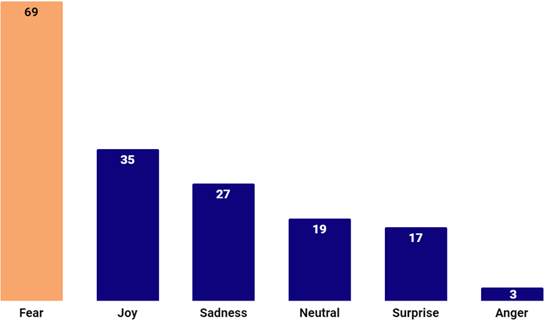
From Figure 1, we see “Fear” as the overwhelming emotion among comments.
Indeed, many netizens worried about the future, speaking of how AI and automation will replace jobs in Singapore:
“I believe that is the concern for most industries, especially those ripe for “disruption”.”
“it’s already happening in the top “professional” industries, where ML machines are getting better than humans at researching legal work and diagnosing patient”
“One big one is self diving (sic) vehicles which would take away a significant source of employment. Automation is targeting a lot of manual jobs, but when these are gone, what will the people who are displaced gonna do?”
However, it seems that netizens are split regarding the impact of AI’s disruption.
Summary Analysis
“I feel that a lot of people are not getting the scale of disruption that automation and AI will cause.\n\nA lot of people seem to think only the ‘low skill/menial jobs’ will be affected.\n\nThis is true.\n\nHowever,I think it’s naive to think that every cleaning
person, driver,etc will be able to upgrade their skills. ‘, “I think we have jobs. I highly doubt this time is different though.\n\nEssentially, even if AI systems can outperform humans in single tasks such as recognising faces or whatever, it is unlikely that AI can take whole jobs; instead, industries that can benefit greatly from AI will restructure their operations such that AI would do things that it can do, and humans would do the other things.”
The Summary Analysis depicts two camps.
The first camp (in orange) shows people who are pessimistic; they believe that widespread unemployment and disruption are nigh. The second camp (in blue) shows the optimists who believe that new technology cannot completely replace humans and that we will be able to adapt.
Anticipating disruption
In 2020, US presidential candidate Andrew Yang did something surprising: instead of blasting his opponents or going on the usual rant of taxing the rich, he instead talked about job loss due to automation and AI.
He emphasised factory jobs being replaced by AI, citing how automation is used instead of manpower to enhance efficiency.
Moreover, the future of driverless cars, according to Yang, will cause widespread unemployment amongst drivers.
This is not the ramblings of a madman. In fact, Singapore, too, will soon have to adapt.
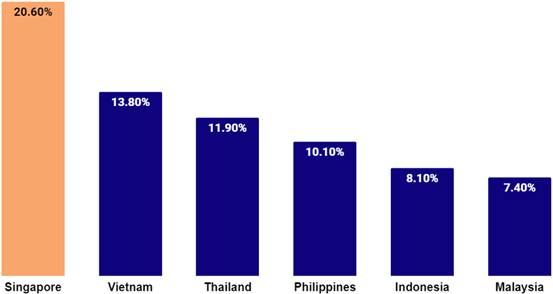
Figure 2. Percentage of jobs displaced by 2028
Data source: Oxford Economics and Cisco
As seen from Figure 2, Singapore will have 20.6% of its jobs displaced by 2028. To put things in perspective, Singapore had 3.6 million people in employment as of
2021. With these projections, at least 740,000 people, or the total population of three of our towns – Sengkang, Tampines and Yishun — will find themselves forced to adapt by 2028.
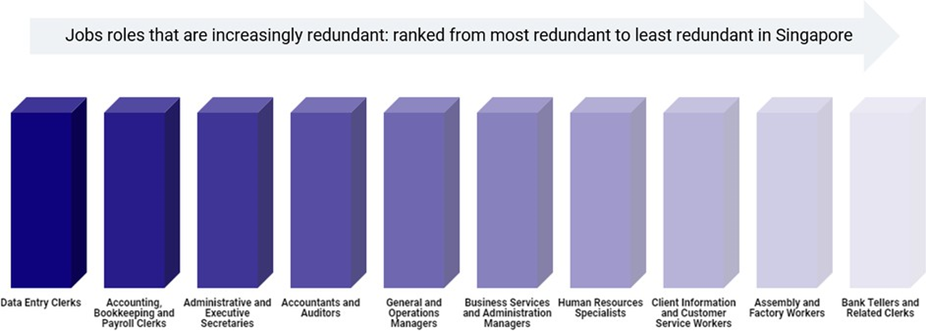
Figure 3. Job roles considered redundant
Data source: WEF
Figure 3 shows us that other job roles are at risk of becoming obsolete.
Job roles that can be automated, such as Data Entry and Bookkeeping, are predicted to become increasingly redundant. Hence, workers in such roles will have to find more relevant occupations if they are to survive in an AI landscape.
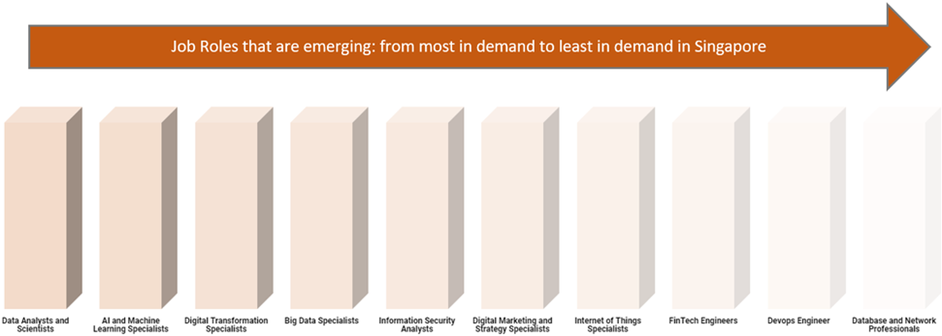
Figure 4. Emerging job roles
Data source: WEF
In contrast, Figure 4 shows increasingly relevant jobs roles.
Data Analysts, Data Scientists as well as AI and Machine Learning Specialists are expected to be more capable of side-stepping disruption.
Drowning in irrelevance or overwhelming stress
Singapore is forging ahead and preparing for this changing landscape with reskilling programmes and incentives.
However, the transition poses a steep challenge.
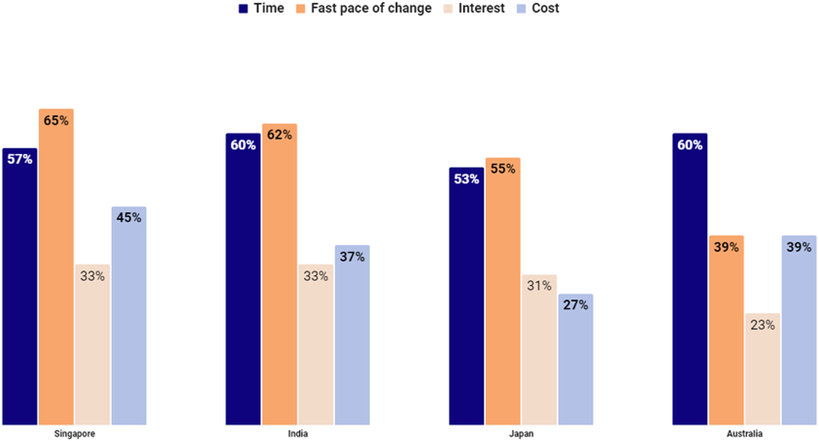
Figure 5. Barriers cited against reskilling programmes
Data source: LinkedIn
For instance, Figure 5 shows that workers in Singapore cite a lack of time (57%) and the overwhelmingly fast pace of retraining (65%) as the main reasons for not engaging in reskilling programmes.
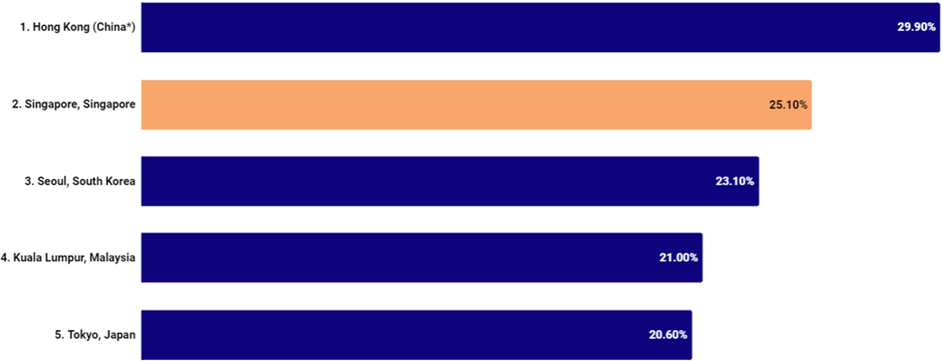
Figure 6. Most overworked countries
Data source: KISI
Moreover, as seen from Figure 6, Singapore has the second highest percentage of overworked people (here, ‘overworked’ is defined as full-time employees working more than 48 hours per working week).
Hence, the status quo, at least for employees, is one of burnout and long working hours.
Playing to our strengths
Clearly, we can expect the disruption of many jobs. However, that does not mean an overhaul of skills that have been gathered through experience. It is worth noting that soft skills, too, are in demand.
Udemy’s 2022 Workplace Learning Trends Report states that companies globally are looking for soft skills, where value-adding beyond what machines and AI can do is a necessary component for employment.
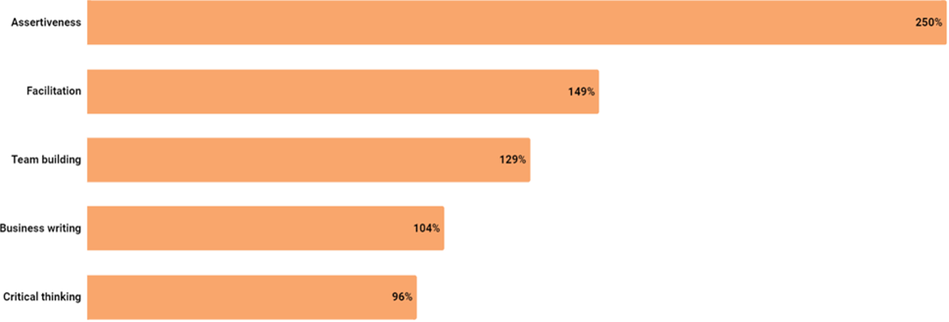
Figure 7. Top 5 surging Communication & teamwork skills
Data source: Udemy
From Figure 7, the report shows how companies are interested in boosting their workers’ soft skills in the area of Communication & teamwork.
Additionally, what of industries that are typically more people-oriented?
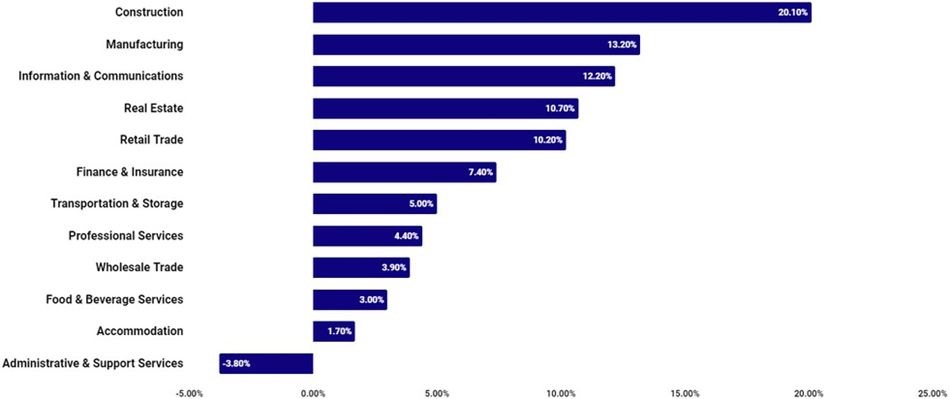
Figure 8. Sectoral growth rates in Singapore
Data source: Ministry Of Trade And Industry
Figure 8 displays the growth rates of several sectors in Singapore.
According to MTI, Sectors like Accommodation and Real Estate are projected to grow even more once COVID-19 restrictions ease.
Yes, AI can disrupt such sectors, but the possibility of complete displacement with the current technology we have is far-fetched.
After all, the very things that make us unique creatures — especially in vocations that require genuine human connection and empathy — may never be fully replaced by AI.
Adapting to the future
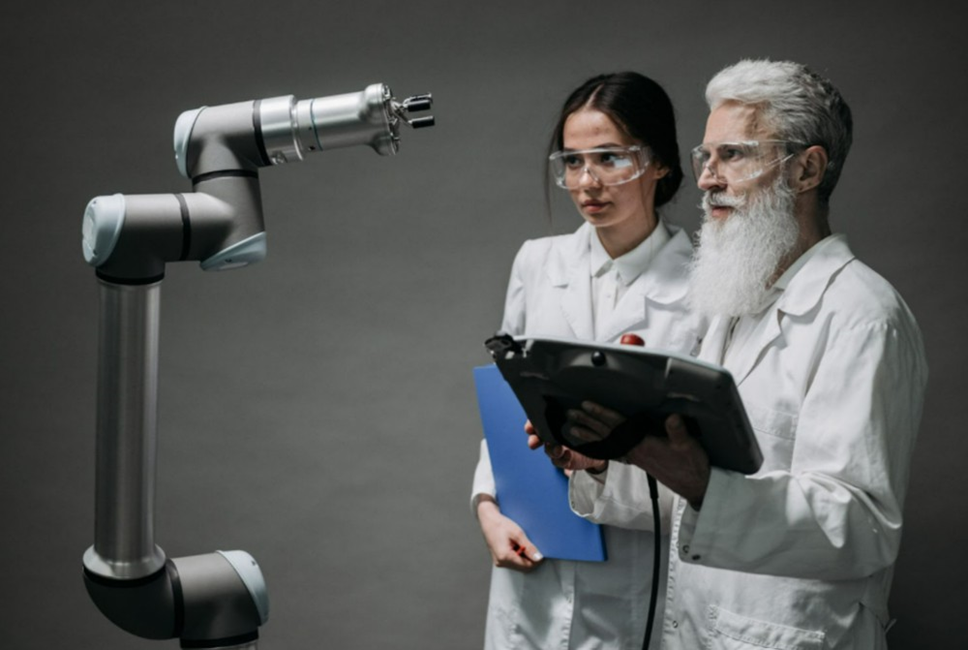
AI can already make art, write poems, and even aid, to a limited extent, in taking care of the elderly.
Is Sam Harris right about AI possibly leading to our doom? Nobody knows.
What is certain is this: one has to either hone his soft skills, adapt and reskill, or choose a more people-oriented job — until the next wave of innovation arrives to challenge our relevance as workers once again.